Superbuilders is the one team in the world taking seriously the idea that evidence-based
pedagogy embodied in great technology can have a scalable impact on education. That's
exactly what I want to be doing. I'll do it anyway, but I'd have greater impact doing it
with Superbuilders, supported by and supporting your resources, collaborators, and
students.
The hard part of software has always been discovering and designing the theory embodied
by the system, not typing the code. In education, there are two halves to the theory: how
the system works, and how children learn. I've spent twenty years on the first, designing
and building systems in many different domains. This year I went deep in the theory of
learning, and began putting it into practice. This is my next mission.
I'm not your typical Superbuilder; I'd bring something different.
Fast-learning and AI-leveraged, backed up by deep experience.
I'll start out building frontline apps just like the rest of your team.
From there, I'll hunt for impact.
I often end up guiding the foundations for others to build on at scale.
I've chatted with more than a few people in and around Alpha and Superbuilders.
I'm convinced that this is where I can have the biggest impact on education outcomes.
Teaching kids well might be the most valuable thing we can do for humanity to thrive
in a world where intelligence is increasingly commoditized.
Traditional schools are held back by politics, ideology, and institutional inertia.
Great technology can do it at scale.
Why technology
Instructional design is hard, and independent from the performance of teaching.
Most teachers are not trained or resourced to do it well,
and resist effective but often highly scripted teaching methods.
Even Engelmann noted the irony of trying to get teachers to behave more like computers.
Technology can embody superior instructional design and pedagogy, and perform it reliably and consistently well.
It can do the part that doesn't have much room for creativity and empathy,
and leave teachers to the personal interactions they thrive on.
Technology is also a path to discovering even better ways to teach. With scalable technology and
experimentation, we can discover even more effective learning. And this can scale
independently of the institutional challenges of traditional education.
Make things happen
I learn fast, and I've demonstrated it many times.
Each of my career experiences has been diving deep into a new domain,
discovering the foundations, and building critical platforms and assets.
Learning speed has been the constant across my career.
Learning about learning has been no different, and I've begun putting it into practice.
Evidence
When I joined Protocol Labs I hadn't used my cryptography background in thirteen years, and
blockchain was a new paradigm: building software to be run on
computers by people who don't trust each other.
The adversarial environment was extreme and bugs put hundreds of millions of dollars of value at risk.
The domain is complex and it is different, but no more so than many others. I
ramped myself up through study and hands-on experience, was promoted to lead a team within
months, and then to the highest engineering job level at the company.
New platforms, taken up early:
an interactive map in an iPhone app before iOS had a maps component (2008)
real-time collaboration at Google Wave, Google Docs later used our tech (2009–11)
trustless decentralized protocols at Protocol Labs (2019–24)
As producing code becomes cheap, the complements to it become increasingly valuable:
theory of the system, its core concepts and right abstractions;
data models and interfaces between components;
judgement about what's worth building;
technical strategy & direction;
high standards;
fast decisions;
taste.
Fast-moving teams run into challenges of scale and complexity,
and I have the experience to help tame them.
I turn to code early and produce significant amounts of working software quickly, without
compromising the future. I uncover and promote the core concepts upon which technical
assets may be built, and plough through technical debt to enable colleagues to deliver
feature work.
Evidence
Google Wave. The product grew out of demoware, built to show potential and win resources.
The core data models and protocols lagged behind what the product had become, with increasing
cruft and complexity. I directed myself into fixing it: I removed unnecessary primitives,
re-expressed functionality in terms of a core, migrated to rewrite the data history,
and built the libraries everyone else used to interact with the protocol.
Outside the UI, scarcely an execution path did not traverse code I ended
up taking ownership of.
Filecoin (Protocol Labs). Two independent node implementations needed actors (faux-smart contracts) whose behaviour matched byte for byte.
Maintaining two code bases with perfect compatibility would be intractable.
I called this out, extracted the actors from the implementation I wasn't associated with,
designed the API they needed from the surrounding node, and adapted my team's implementation to use it.
The result was a shared actors project used by
both implementations and independently testable.
Learning about learning
I've spent much of this year diving deep into the science of learning, the practice of teaching,
and the failings of and opportunities for education technology.
You know this stuff; I do too.
I spent a term volunteering at the local primary school, three mornings a week,
learning about the practical realities as well.
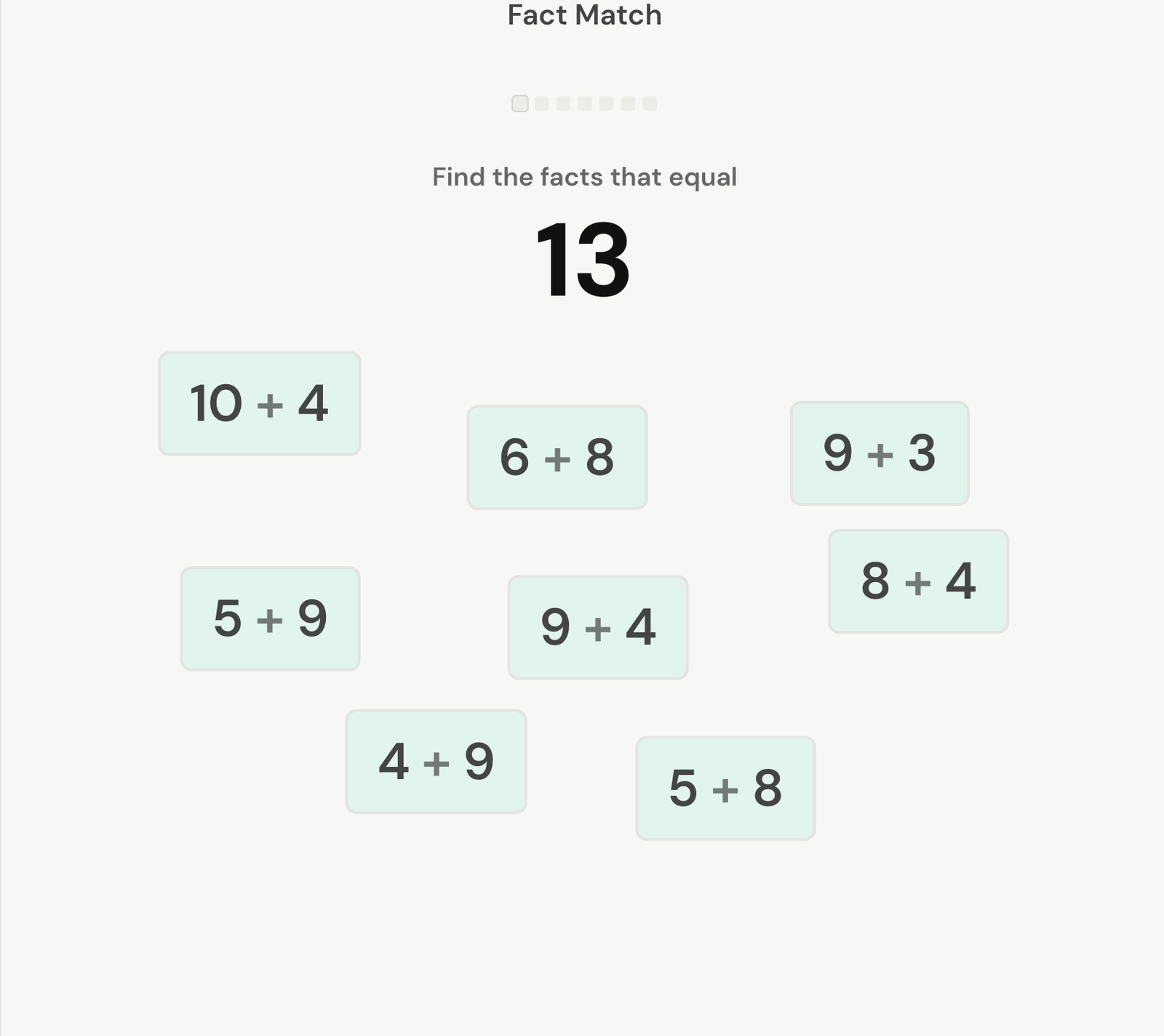
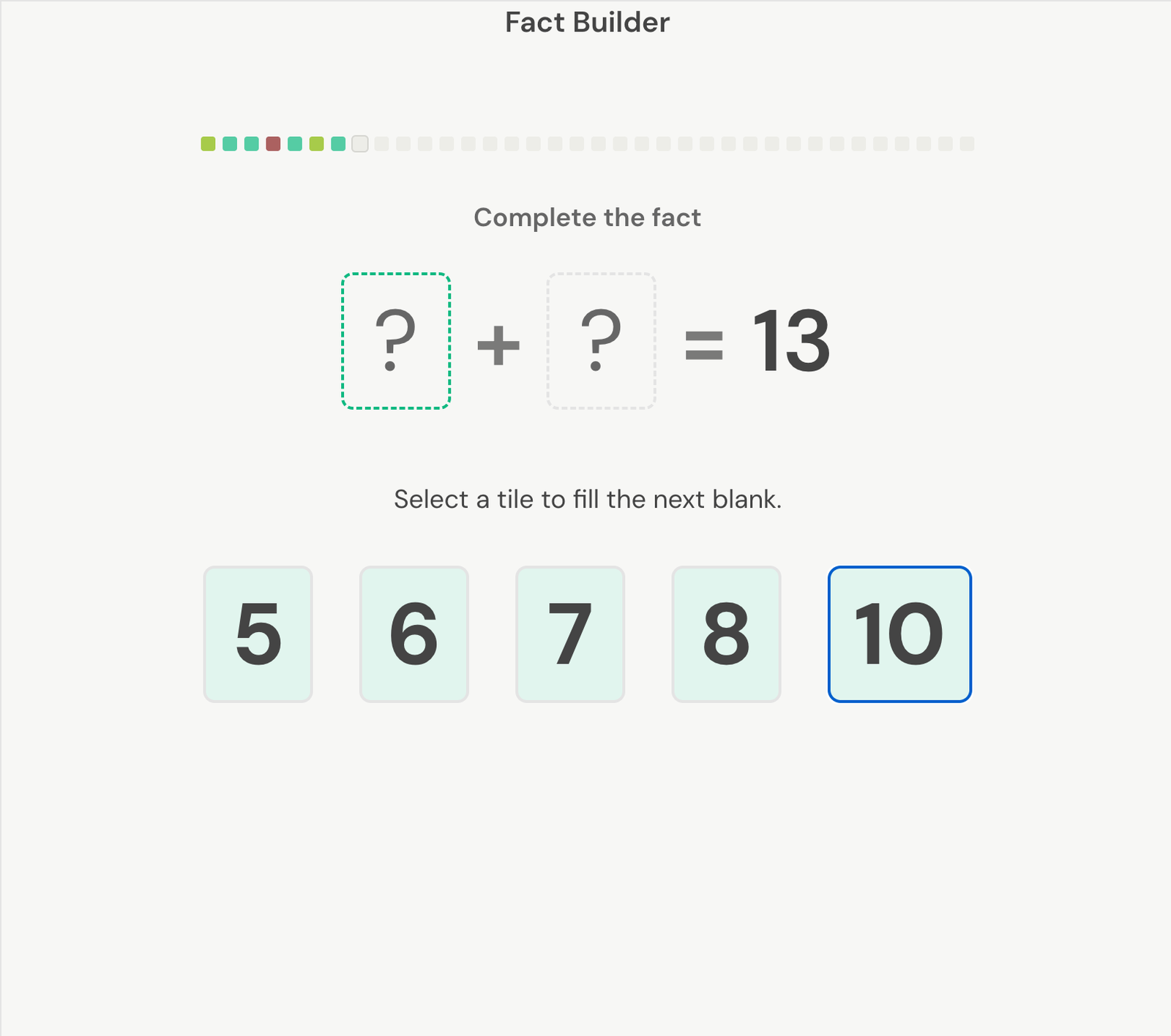
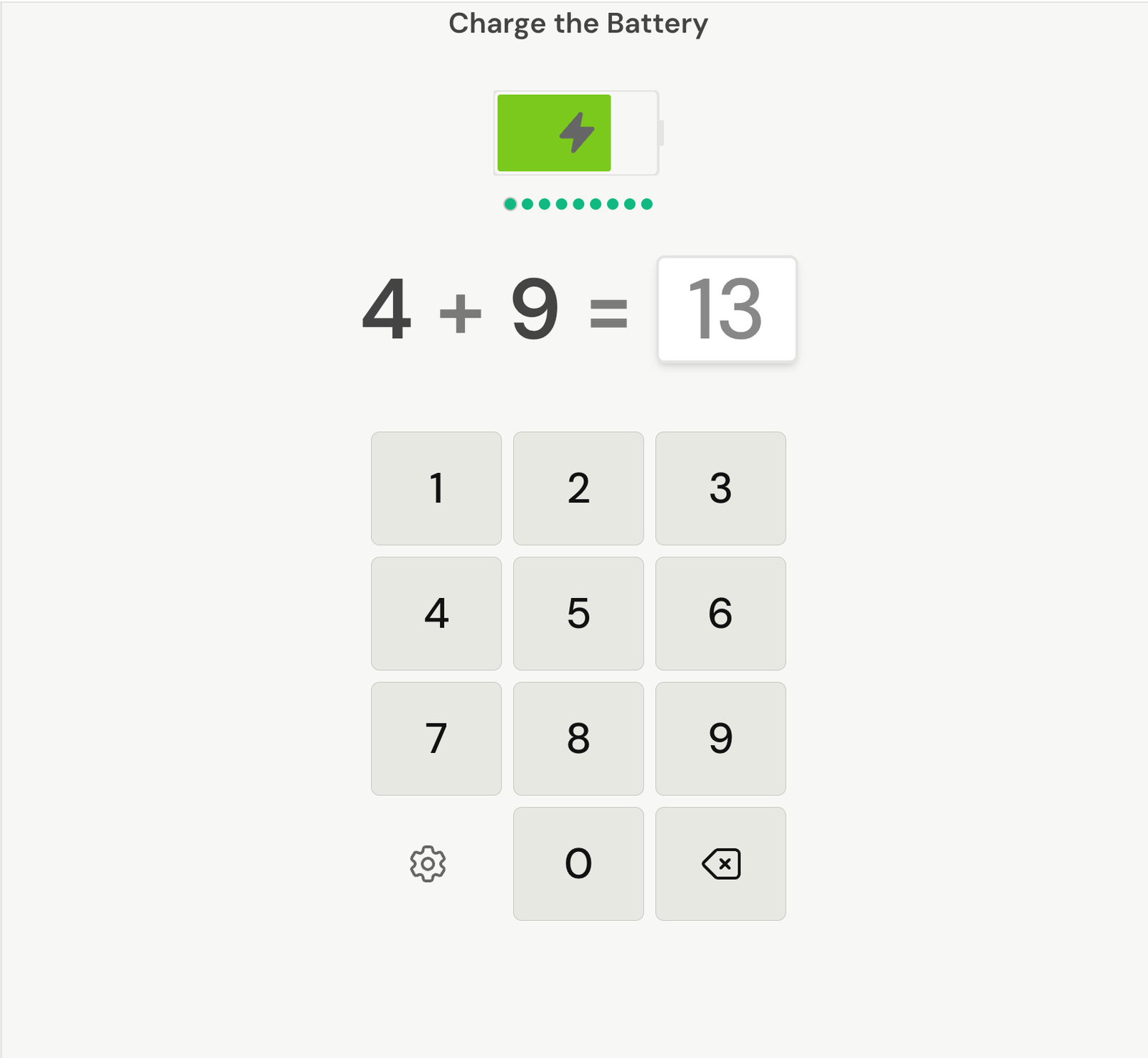
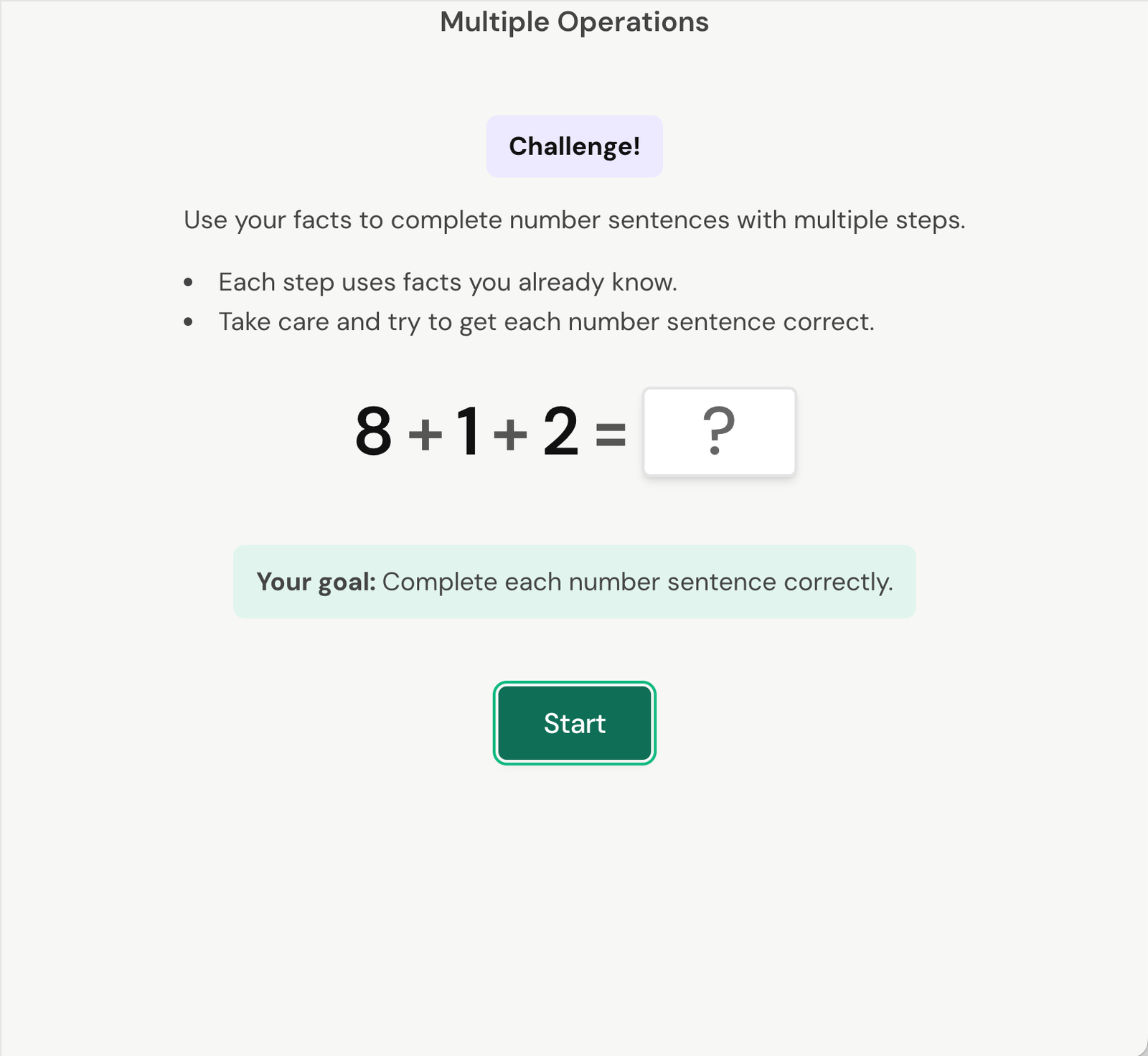
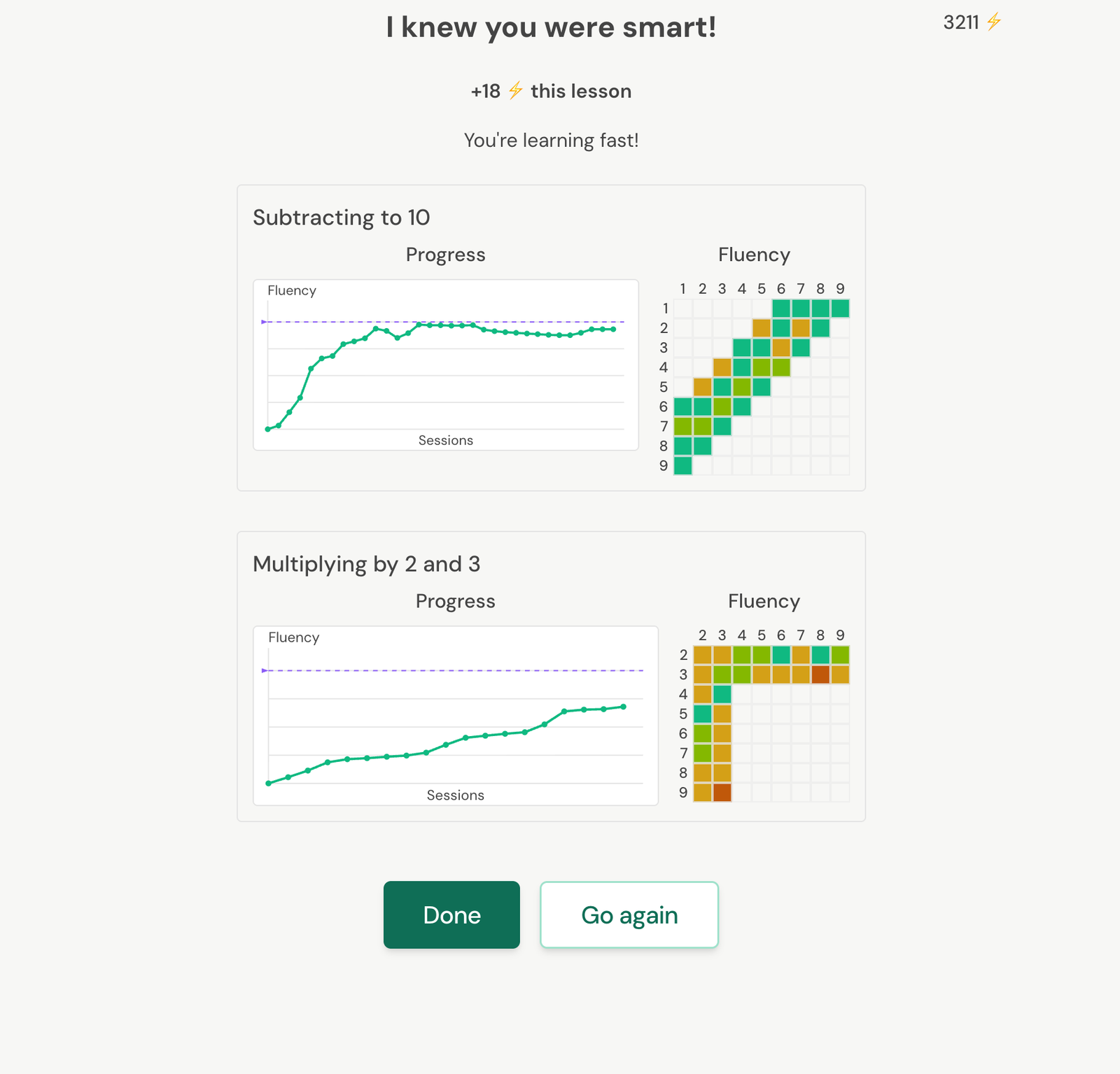
Five minutes a day until math facts are automatic. Developed initially for my daughter, and
now in regular use by a local teacher. Based on Dr. Brian Poncy's paper-based Facts on
Fire, expanded and made adaptive.
Fact Match: fact family familiarization.Fact Builder: cloze-style retreival.Charge the Battery: speed focus with a game mechanic.Challenge: apply facts in more complex settings.End of a lesson: fluency over time, and fact by fact.
1 of 6
More detail
Short sessions, high time-on-task, visible progress.
Follows the instructional hierarchy from acquisition through fluency and generalization.
Spaced repetition builds long-term memory. Once facts are automatic, they're applied
to new settings like factorisation, fractions and decimals.
I'm sure Alpha has a better version of this. I have much to improve
from this first version.
Less linear. MF holds a high fluency standard module by module, which is great for
motivation when kids are doing well, and bad when they're struggling or stalled.
More engagement: I initially avoided games, because most gamified edtech is terrible.
But being a game doesn't cause the bad pedagogy, and engagement and motivation are
so important. More motivation built into the practice, not bolted on.
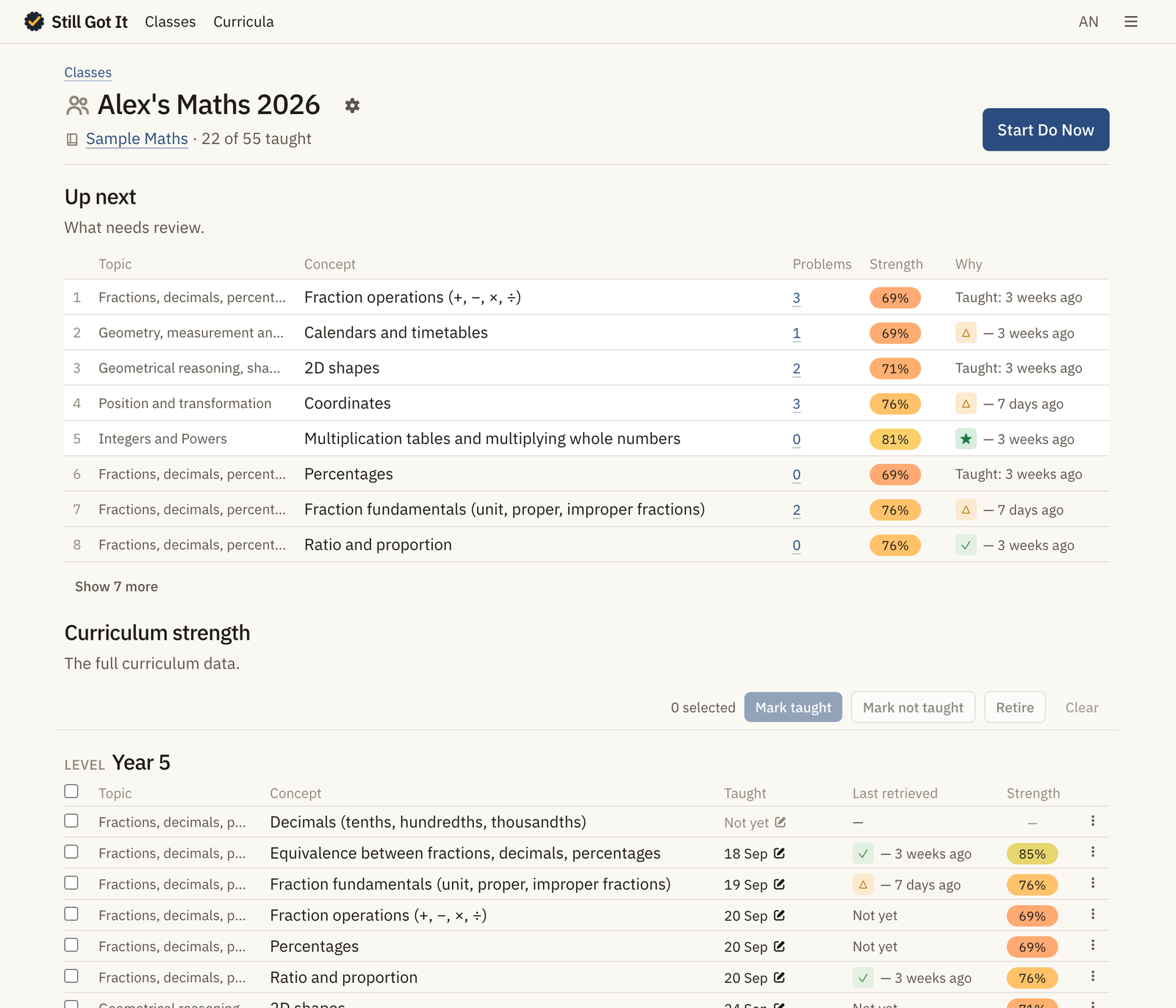
A retrieval practice scheduler for classroom teachers. It's an attempt to embody good
pedagogy in the technology, so that the easy path for the teacher is also the
pedagogically sound one.
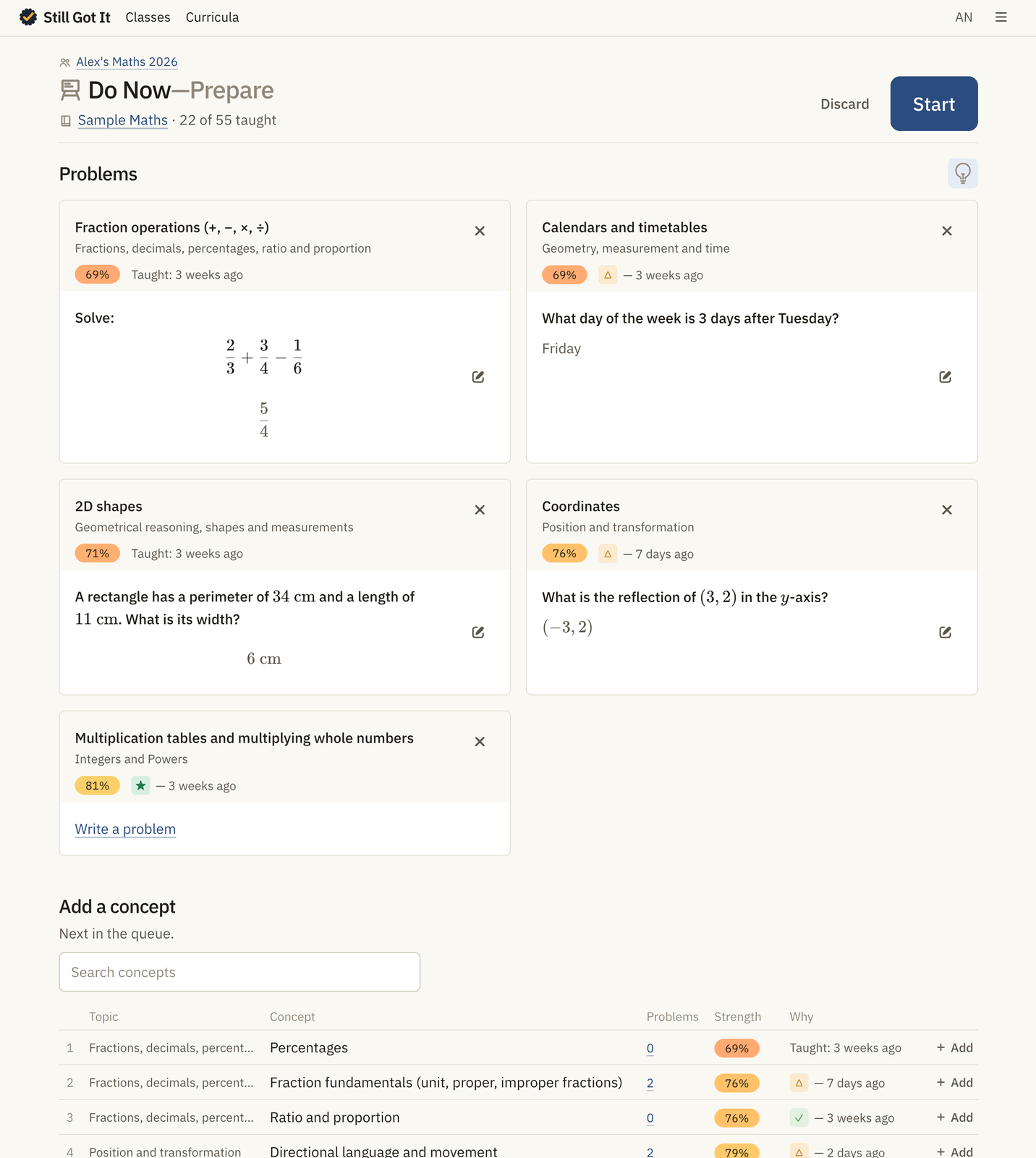
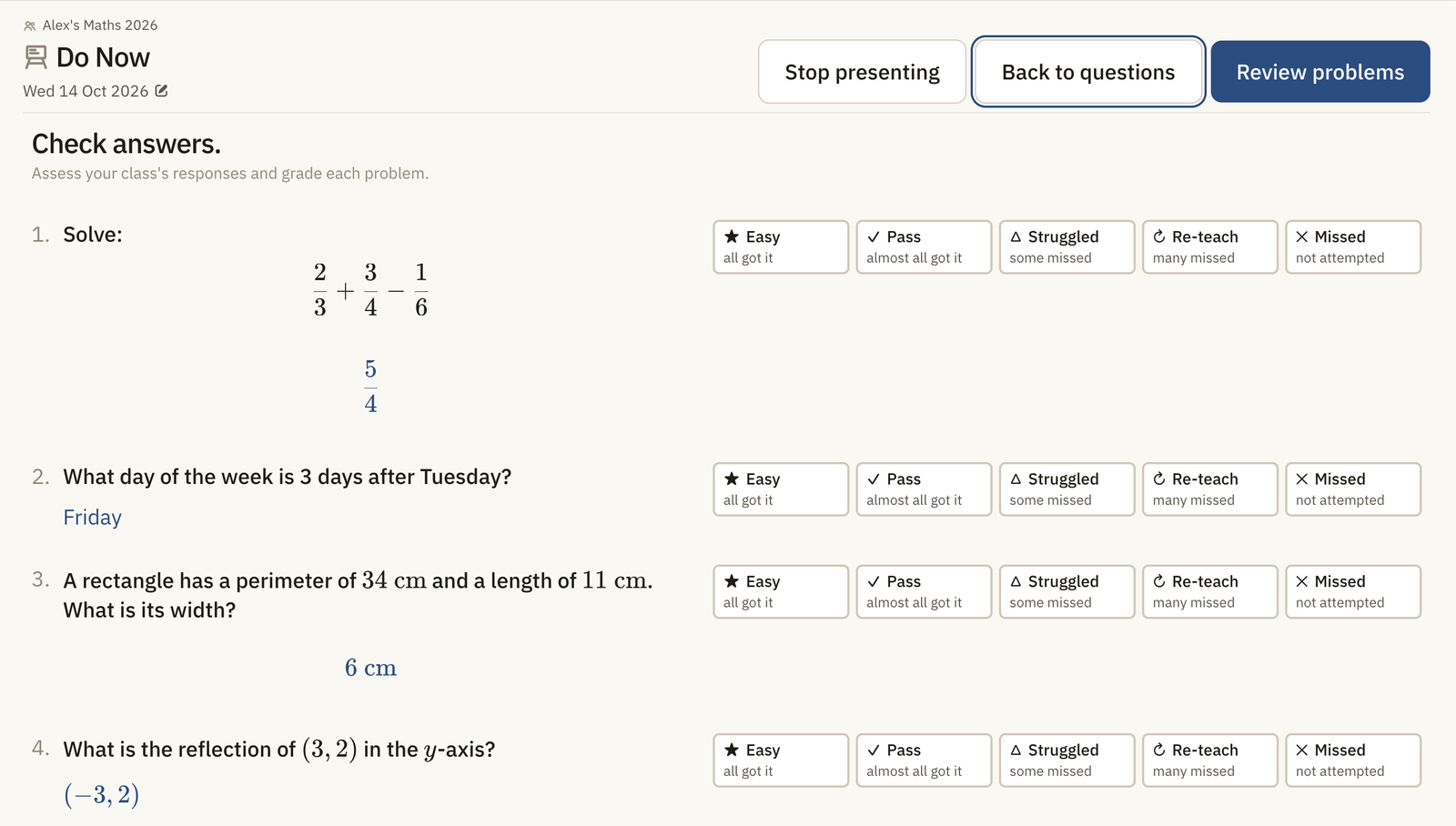
The class overview: what's been taught, how strong it is, and what's up next.Preparing a Do Now: concepts due for review, with problems ready to go.Presenting the Do Now to the class.Checking answers: the teacher grades how the class did. That feeds the schedule.Worked solutions, shown to the class after they've tried.
1 of 5
More detail
Teachers know that kids forget and they need to do regular revision, but manually tracking everything
they've taught, when it has been revised, and implementing a spaced repetition schedule is
difficult. Creating the problem sets is a lot of manual work. Great schools have
department-wide resources for this, but in most it's just done really poorly.
Still Got It tracks each of the concepts that have been taught and schedules them for retrieval
practice. It builds a four-question "do now" exercise for the teacher, including problems
for the concepts and presentation on screen.
It embodies the pedagogy in technology.
Next
Some projects on my horizon either way:
Re-writing Engelmann's Conceptual Learning for a modern lay audience
A classroom-oriented hardware device: e-ink, teacher-controlled, distraction-free (does Alpha have a team on this? I'd be interested)
A complete DI teaching app for primary math calculation ability
More teacher-facing apps making good pedagogy the easy default
Track record
I often end up in a role shaped like this:
start out building something directed by the team,
set new standards by example,
discover and improve the system core,
see round corners to identify critical problems,
always building systems and culture that support highly effective teams.
The pattern
Protocol Labs was a group of very smart, opinionated researchers and
hackers. I was an asset to that team, not because I was the same, but for the
complementary skills and experience I brought: professional high standards for quality and process,
architectural sense, rigour in testing and observability,
collaboration patterns that improved velocity,
and ensuring that critical things started by others were delivered.
High expectations and high support – just like school.
Exploring my next area of impact and the rapidly-changing tools and processes of building
software. Building mathfactor.app and stillgotit.school.
More
Extensive reading into the science of learning, the practice of teaching,
the failings of and opportunities for education technology.
Prototyping numerous primary education tools aiming towards Engelmann-style Direct Instruction in high-quality software for complete teaching.
Hired as a senior SWE, but quickly became a team and technical leader for the Filecoin
protocol. Promoted to the highest job level of any technical staff.
More
Led uncertain, business-critical projects including the prototype node implementation,
parts of the protocol specification, and the built-in smart contracts. Designed &
implemented numerous core components in node and smart contract software. Established
architecture for shared components, testing, and interoperability. Co-opted myself to
ensure critical things started by others were delivered. After network launch, I
instigated and led a large fraction of all improvements delivered to the Filecoin
protocol, in collaboration with cryptographic researchers, protocol designers, and others.
Known for leading effective teams, setting tone and expectations up front, demonstrating
excellent team-first behaviours, and coaching more junior colleagues up to those
standards. Improved velocity with disciplined collaboration patterns.
Ploughed through legacy and technical debt to enable colleagues to deliver feature
work. Raised uncomfortable red flags to project leadership when uncertainty or risk was
being mis-perceived.
Defined a SWE hiring plan and process for my team which was subsequently adopted by almost
all SWE roles, transitioning the company from ad-hoc to a structured, pool hiring model.
Established a shadowing program, trained other interviewers, and wrote the handbook on
technical interviewing.
Lexy Co-founder, VP Engineering
2015–2018
Sydney (semi-remote)
Connected the founding team for an attempt on native-quality machine translation: a novel,
pragmatic, and human approach based on structure (before AI owned this).
Led engineering & process from zero through to paying customer.
More
Designed and built core platform components, data models and services, including:
novel extensions to context-free grammar structure and parser enabling precise, concise
structural control; skunk re-implementation of core models and parsers for huge speed
improvements; scalable batch translation and indexing system for rapid feedback on model
changes; versioned corpus/outputs store providing immutability guarantees for downstream
caching. Known for maintaining technical vision and championing long-term priorities. Led
recruiting and brought in ¾ of the engineering team.
First Order Founder, Principal
2014–2015
Sydney
Founded and led a small, star-quality software engineering consulting team, building
technology foundations for scalable businesses.
Projects included photo/messaging app back-end, web analytics database and query
platforms, geospatial data storage & visualisation, special-interest social network
backend and iOS app.
Designed and implemented the back-end for Canva's social layer: following, comments,
liking, activity streams. Social graph for hundreds of thousands of users (now millions), activity
streams processing millions of events per day.
Posse VP Engineering
2011–2012
Sydney
Built and led a team of young but brilliant engineers through two pivots to create a novel
product. Dramatically raised expectations and quality of both code and product.
More
Instigated peer code review & continuous deployment, led hackathons and fix-its, improved
quality, flexibility and velocity, as well as shared ownership. Drove adoption of
instrumentation and a culture of shipping things we could measure. Designed and
implemented many modules, including a novel index and back-end for socially ranked search
results. The team had no voluntary attrition during my leadership, and the occasional
recruiter described the team as "untouchable".
Google Senior Software Engineer
2008–2011
Sydney
Tech lead of the Google Wave data models and communication protocols. Led a small team who
developed the substrate of Wave's real-time magic.
More
Designed and implemented the Wave conversation model, internal APIs, identifiers, access
control service, and many other moving parts. Purged complexity to reveal a simple,
powerful core, significantly reducing the effort of new feature development. Co-wrote the
client library that all seven internal services used to participate on the wave bus.
Found and fixed gnarly protocol bugs until syncing was robust. When Google withdrew
support for Wave, I instigated the open sourcing of more code and rallied a team to
develop the "Wave in a Box" (now Apache Wave) open source project.
Earlier
2003–2009
Sydney
jamcode (co-founder): GasBag, the most popular fuel price finder for iPhone. One
of the first interactive maps in a native app, before iOS had a maps component.
Deep Grey Labs (co-founder): a news personalisation service.
UNSW: tutored undergraduate computing classes for five years;
lectured Cryptography and Security to final-year/postgraduate students, with
outstanding student feedback.
For my honours project I programmed robot dogs to play soccer. rUNSWift placed 3rd in the
world at Robocup 2005. (Code, thesis)
Things I've made for fun
A few small projects on the side
Countermove (2025): a gaming platform where AI agents play against each other, for
fun and science. With Nicola Greco.
Ex (2024): a data-oriented programming language for notebooks, spreadsheets and
database applications.
Shadow Wall (2016): a video wall projecting synthesised shadows as light, for Vivid Sydney.
Thunk (2015): lightning-fast personalised search for Confluence and Google Drive, all
in the browser.
Wemail (2015): real-time collaborative drafting in Gmail.
Brolly (2014): hyper-local rain prediction from radar images. It can be unnervingly
accurate.
Soundbyte (2013): peer-to-peer data transmission using high-frequency audio. Won
OzApp 2013.
Heart of the Forest (2013): a Global Game Jam game; People's Choice in Sydney.
Practicalities
I live in Queenstown, New Zealand. Austin afternoons are my mornings: the time difference is 5–7 hours depending on season.
I'd love to travel to Austin three or four times a year.
What's next
I've chatted with more than half a dozen people in and around Alpha and
Superbuilders: engineers, learning scientists and former staff.
You have a unique mission, and a unique culture to go with it.
I want to help you succeed.
Some things I'd still like to learn:
How integrated or isolated are the different products, and what's the direction there?
What learning domains need the most help?
How distributed is the team really? How are teams composed, and what makes working across distance work?
What behaviours does the team reward? Who is successful?
Where are the gnarliest technical challenges, now and in the future?
How and when might your apps be released to learners outside Alpha schools?